
UNiversal Native Income (UNI)
Photo ©Rick Sheremeta
Rationale
It’s no secret that the Native American habitat, lifestyle, means of survival, location, right of passage across the land, culture, population and vitality have been replaced by the incursion of European and other immigrants. A credible estimate of Native American population in 1492 is 60 million. By 1890 there were 250,000, and the current population is 2.694 million.
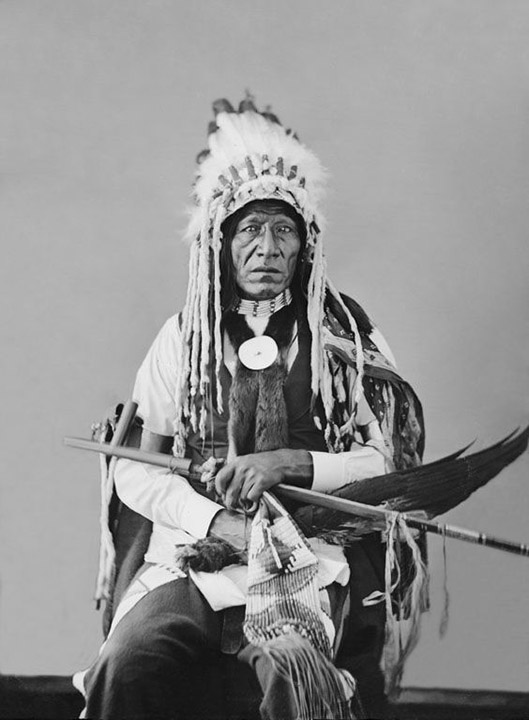
What is rarely discussed is that the European concept of land ownership has redefined life on the American continent. What used to be a natural setting where Native Americans roamed freely in a hunter/gatherer lifestyle has been replaced by a cordoned off, restricted environment where free passage is not allowed.
The conflict between these two concepts of existence, and the eventual dominance of the European model, has deprived the indigenous population not only of access to the land, but to their means of survival both financially and culturally.
In fact they are a displaced people, herded into reservations in some of the least fertile, most bleak regions of the continent.
This uncompensated and forced displacement is, in effect, the original sin of the United States experiment, along with slavery.
In terms of conquest, the Native Americans lost the war for their existence, and are simply a subjugated people. On the other hand, we can look at the situation from a higher perspective, and consider what should be done, not what has been done. When we review the imposition of the the land ownership concept onto the continent, we might ask what the aggressor culture could reasonably do to compensate the other culture. If it is simply a war, then one party loses.
But if we hold the imposing party to task, and assuming that their concept holds sway over the land, shouldn’t they compensate or come to an agreement with the previous owners, by the principles of the new system? We are left with several options to address the issue:
- The Europeans can apologize and leave the continent
- They can pay for the land
- They can lease the land
It’s patently unlikely that #1 will happen. #2 is likely to be prohibitively expensive, and Native Americans may even not agree to sell the land.
Therefore let’s look at #3.
To set a price for a lease of the 2.4 billion acres of the United States, for example, we need some sense of how much money we would like to generate annually. One thought is to create a universal basic income, or in this case, a Universal Native Income (UNI) for the 2,694,000 remaining native Americans. Setting a figure of $1000 a month, and since approximately 30% of Native Americans are under 18, we could pay that amount for 27 billion if we scaled up the payout by age:
- 0-2 = $100
- 2-4 = $200
- 4-6 = $300
- 6-8 = $400
- 8-10 = $500
- 10-12 = $600
- 12-14 = $700
- 14-16 = $800
- 16-18 = $900
- 18+ = $1000
Revisiting the 2.4 billon acres figure – if we paid a dollar an acre per month as a lease to the Rebuild Native America fund, that would generate 28.8 billion, leaving 1.8 billion per year to address other issues such as housing, food, et al.
A thousand dollar a month UNI is not much. But it would be an indescribably transformative benefit, and begin addressing the cultural and economic imperialism that has relegated once proud and successful communities of humans to sad footnote status.
We need to address and fix this imbalance if we are ever to justifiably rest easy on this continent.